
Repeated trips
We assess the cause and recommend a practical route to restore dependable performance.
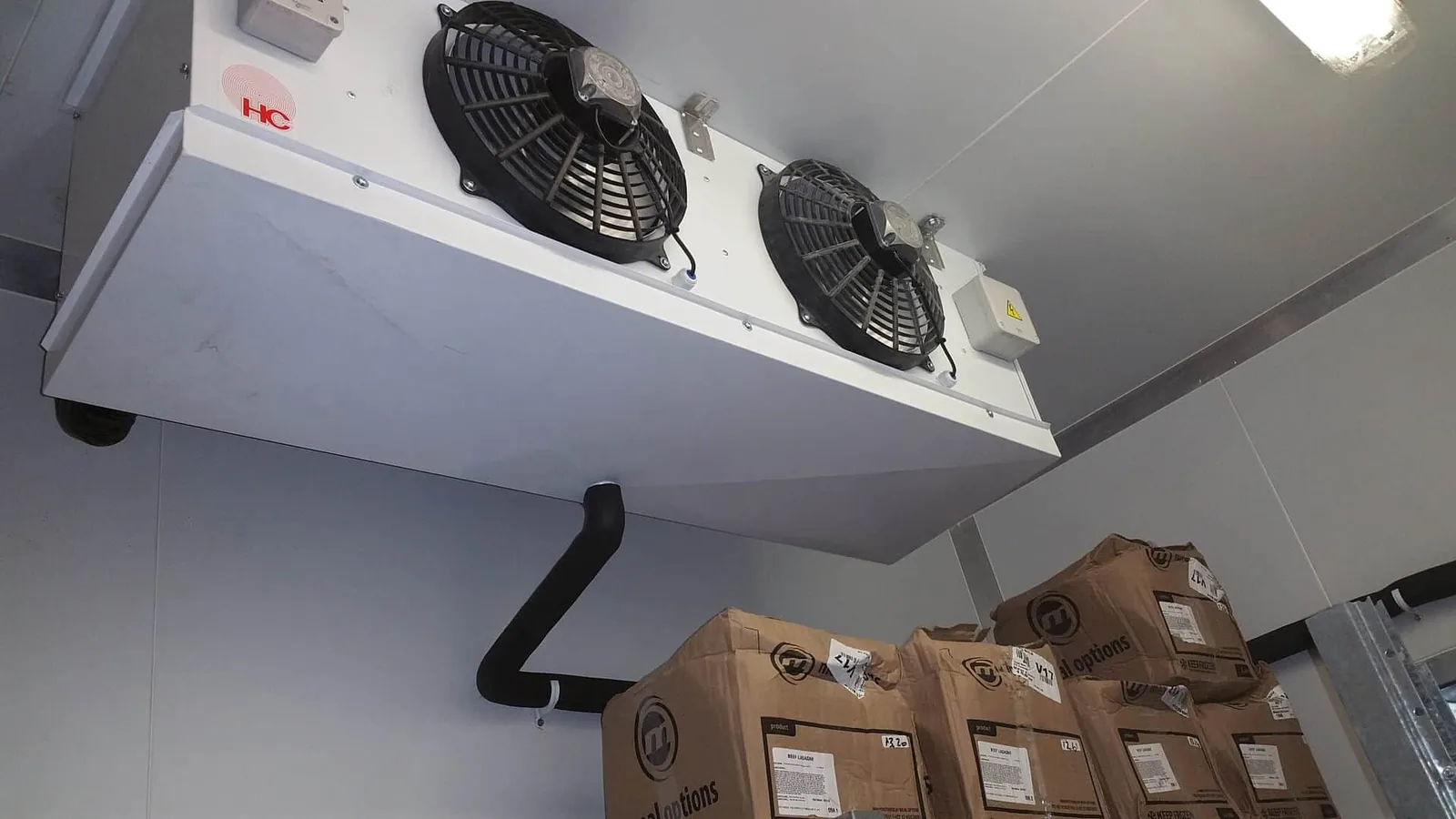
We repair and service commercial and industrial chillers, tackling circulation faults, cooling failures, system alarms and compressor problems to help get your equipment back into operation.
Tell us what needs attention. We’ll send your request to our service inbox and confirm it by email. For urgent assistance, call 070 332 5672.
Prefer to speak to us? Call 070 332 5672
We maintain and repair chilled-water and process-cooling equipment serving demanding commercial properties.
We examine controls, operating conditions, pump performance and refrigeration components. We aim for dependable output under real operating demand, not a temporary reset of an alarm.
We assess the cause and recommend a practical route to restore dependable performance.
We assess the cause and recommend a practical route to restore dependable performance.
We assess the cause and recommend a practical route to restore dependable performance.
We assess the cause and recommend a practical route to restore dependable performance.
We start by understanding the symptoms and how the equipment is used. We check the relevant components, explain what needs attention and discuss the repair before proceeding. If installation or replacement is the more sensible option, we explain why.
We aim to leave you with an operating system you understand and a clear view of any maintenance that may help avoid repeat faults.
Explore local refrigeration service information across major commercial, industrial and residential areas.
Commercial chiller systems are used to remove heat from water or another circulating fluid serving comfort cooling, process equipment or specialised facilities. A cooling complaint can therefore originate in the refrigeration circuit, the fluid circuit or the connected load. Our investigation starts with the system's actual duty: what it cools, when the problem occurs and how the facility is affected. A building that becomes warm during peak afternoon demand may present a different fault from a chiller that cannot start in the morning. We ask what alarms are present, whether pumps run and whether the chiller has recently been serviced or altered. We avoid treating every temperature alarm as a refrigerant-charge issue. The objective is to identify the point at which the intended heat-transfer process is breaking down, then propose a proportionate repair.
Air-cooled chillers reject heat into the surrounding air using condenser coils and fans, so clearances, ambient temperature and coil condition matter. Water-cooled chillers reject heat through a water circuit and typically depend on associated pumps, cooling towers or other heat-rejection equipment. The diagnostic approach must reflect the installed arrangement. A water-cooled machine may experience high condenser temperatures because of tower performance or inadequate flow even if the compressor itself is healthy. An air-cooled machine may trip because a fan fails or hot discharge air recirculates around its enclosure. We examine the full heat-rejection path instead of evaluating the refrigeration components in isolation. This can prevent unnecessary parts replacement and reveal why a fault returns after apparently successful work.
Insufficient fluid flow can cause low-temperature trips, poor cooling output and unstable operation. Potential causes include blocked strainers, air in the circuit, closed valves, failing pumps, incorrect balancing or fouled heat exchangers. We examine the relevant pump and flow indications, temperature differences and any available controls data while respecting the equipment's design. More flow is not automatically better: the correct flow must suit the chiller and connected system. We do not bypass flow proving or freeze-protection devices merely to keep the compressor operating. If fouling or blockage is suspected, we explain the appropriate cleaning or hydraulic investigation. A repaired chiller cannot perform consistently when the distribution system is not delivering the required fluid movement. Coordinating with the site's maintenance team is often essential.
Low-pressure or low-temperature alarms have several possible causes, including insufficient load, restricted fluid flow, sensor problems, control settings or refrigerant-side defects. The apparent symptom does not identify a single failed component. We review when the alarm occurs, the fluid set points and whether the event is connected to changes in demand. Freeze protection is particularly important because an evaporator damaged by freezing can create major additional repairs. Protective devices should remain operational while troubleshooting. We consider whether the unit cycles normally at modest load and whether a fault appears during start-up or sustained operation. This structured approach helps distinguish control issues from genuine loss of capacity and supports decisions about whether adjustment, service or component repair is appropriate.
A high-pressure shutdown may be associated with blocked air-cooled coils, failed condenser fans, inadequate cooling-water performance or other heat-rejection faults. Restarting equipment repeatedly without checking the cause can increase risk and delay a lasting repair. We ask whether the trip correlates with hot weather, peak building demand or a recent change to surrounding equipment. Fan sequencing and condenser-water control may be as important as the compressor itself. We investigate what the installed sensors and protective controls are indicating, while avoiding assumptions based only on one alarm code. Once the root cause is established, corrective work should restore an appropriate operating envelope. A system that starts again after cooling down is not necessarily repaired if the original heat-rejection problem remains.
Many commercial chillers use capacity staging, variable-speed drives or multiple compressor circuits to match cooling output to demand. A machine may cool adequately at full load but behave poorly at part load, or one circuit may perform while another repeatedly trips. We examine operating sequences and alarm histories to understand when performance becomes unstable. A failed sensor, communication fault or incorrectly configured setting can mimic a mechanical problem. We do not assume that every display message means a control board needs replacement. We also consider the connected building-management system where applicable, because external enable signals and demand limits can affect operation. A successful repair should be verified under representative conditions, not judged only by whether the machine starts during a short test.
Compressor noise, overheating, poor capacity or failure to start needs evidence-led diagnosis. Electrical supply quality, motor protection, lubrication conditions, refrigerant circuit behaviour and the overall load can influence what appears to be a compressor fault. We distinguish between issues in the starting and control components and symptoms suggesting a more serious internal problem. A major compressor replacement can be expensive, so we communicate what tests support the conclusion and whether other system faults might damage a replacement. We also consider the age and service history of the equipment and the availability of compatible parts. The aim is to help the operator make an informed decision between repair, planned replacement and further investigation rather than immediately choosing the most extensive work.
A chiller with reduced capacity may have a refrigerant problem, but charging should never be used as a universal response to poor cooling. If a leak is suspected, a suitable investigation must identify the affected circuit and evaluate repair feasibility. Refrigerants differ by equipment generation and applicable safety requirements; correct identification and competent handling are essential. We do not endorse mixing refrigerants, bypassing leak detection or charging by guesswork. Where repair requires isolation, recovery and subsequent verification, these steps form part of an appropriate repair approach. We explain what is known about the loss of performance and what remains uncertain until testing occurs. We also consider whether the symptom could instead result from heat-exchanger fouling or inadequate water flow, so unnecessary refrigerant work is avoided.
A commercial chiller can support an office, hotel, shopping facility or a more specialised business system. The operational risk depends on the connected load, whether spare capacity is available and how quickly temperatures change. We ask about the building's operating hours, access to the plant room, isolation requirements and the people responsible for approving equipment shutdowns. Work on a multi-circuit machine may differ from an intervention that requires complete unit isolation. We avoid promising an uninterrupted repair until the configuration and fault are understood. Customers should communicate any critical cooling loads or contractual temperature requirements early. That makes it easier to plan a sensible diagnostic approach and to coordinate necessary site personnel, without confusing an equipment repair estimate with a guarantee of operational continuity.
When contacting us, include the chiller make and model, whether it is air-cooled or water-cooled, the current fault message and when the problem first appeared. If available, describe inlet and outlet fluid temperatures, whether circulating pumps are operational, and whether the condition affects one chiller or an entire plant. Photographs of the rating plate and controller may help establish the installed configuration. We also need the Gauteng site location, safe access arrangements and any permit-to-work requirements. Please do not enter restricted plant areas or open electrical equipment solely to gather these details. We use the information to frame the service discussion and distinguish likely hydraulic, electrical, control and refrigeration issues. Accurate preliminary details reduce wasted assumptions but cannot substitute for on-site assessment.
Commercial chillers benefit from planned reviews of condenser performance, flow conditions, controls, sensors, fans or pumps, electrical components and service records. The useful scope depends on the specific machine, water treatment arrangements and duty cycle. We recommend paying particular attention to recurring trips, drift in operating temperatures and changes in energy demand, because these patterns can reveal deterioration before complete shutdown. Equipment age and parts availability also influence repair planning. A maintenance history is valuable when deciding whether repeated component repairs remain economical or whether a larger intervention should be considered. We describe the implications of identified defects so that facility managers can prioritise work according to operational risk and budget. Planned service improves information and can reduce preventable breakdowns, but it does not eliminate every failure.
Chiller failures that appear intermittent are often easier to understand when operators can provide a chronology rather than a single alarm screenshot. Records of chilled-water temperatures, pump status, outdoor conditions, controller demand and trip times may show whether a problem develops during start-up, at high load or after several hours of running. We consider which data points are actually reliable and whether the control system's displayed values need independent confirmation. A problem coinciding with peak heat may involve condenser conditions, whereas failures following pump changes may indicate a circulation issue; neither relationship alone proves causation. We use trends to guide checks, not replace them. Customers can assist by avoiding unnecessary changes to set points or repeated resets before the observations are recorded. Clear documentation makes it easier to communicate findings across maintenance shifts and to confirm whether a proposed repair has addressed the original pattern of failures.
We handle chiller enquiries in Gauteng by starting with the equipment, its role and the reported symptom—not with a preselected replacement part. A complaint such as “not getting cold” can involve airflow, controls, heat rejection, power supply or refrigerant-circuit performance. We want to understand what changed, when it changed, and how the system behaved beforehand.
For equipment rooms in Gauteng, the practical priority is often to understand whether temperature control has failed entirely or whether performance has declined under a particular operating load. We consider that distinction when discussing repair options. A technician may need to inspect the installation and measure relevant conditions before identifying the cause.
We recommend preparing the model number, any fault codes, operating temperature and a description of recent changes. This helps us plan the correct chiller assessment and avoids promising a repair outcome before inspection.
When customers in Gauteng report intermittent pump or sensor faults, we do not assume a single cause. Cooling demand changes with production cycles, inlet water temperature and equipment utilisation. A meaningful fault assessment starts with the process requirements and the trend that preceded the alarm. The interpretation depends on equipment design, usage and the information available at inspection.
Our assessment of process demand and operating load also considers what happened immediately before the fault appeared. Changes in stock loading, cleaning routines, electrical supply or operating hours can help distinguish an intermittent fault from a persistent mechanical issue. We explain which observations are useful and which conclusions require measurement.
After corrective work, performance should be checked under relevant conditions. We explain what the customer can monitor afterward—for example, temperature trends, unusual noise, recurring alarms or door performance—so a continuing issue is identified promptly.
When customers in Gauteng report high-pressure shutdowns during heavy production, we do not assume a single cause. Restricted strainers, failing pumps or insufficient flow can create low-temperature protection trips. We review flow indication, available strainers, pump behaviour and safe isolation requirements. The interpretation depends on equipment design, usage and the information available at inspection.
Our assessment of circulation and differential pressure also considers what happened immediately before the fault appeared. Changes in stock loading, cleaning routines, electrical supply or operating hours can help distinguish an intermittent fault from a persistent mechanical issue. We explain which observations are useful and which conclusions require measurement.
When customers in Gauteng report low-flow alarms after process changes, we do not assume a single cause. Air-cooled condenser fouling and water-cooled heat rejection problems must be investigated differently. We check installation environment, airflow or water-side conditions and the equipment control sequence. The interpretation depends on equipment design, usage and the information available at inspection.
Our assessment of condenser heat rejection also considers what happened immediately before the fault appeared. Changes in stock loading, cleaning routines, electrical supply or operating hours can help distinguish an intermittent fault from a persistent mechanical issue. We explain which observations are useful and which conclusions require measurement.
When customers in Gauteng report poor leaving-water temperature under peak demand, we do not assume a single cause. Resetting a trip without understanding its cause can create recurring interruptions. We capture alarm histories, sensor readings and start-stop sequences before determining next steps. The interpretation depends on equipment design, usage and the information available at inspection.
Our assessment of controls and protection alarms also considers what happened immediately before the fault appeared. Changes in stock loading, cleaning routines, electrical supply or operating hours can help distinguish an intermittent fault from a persistent mechanical issue. We explain which observations are useful and which conclusions require measurement.
When customers in Gauteng report intermittent pump or sensor faults, we do not assume a single cause. Poor circulation through an evaporator can leave a chiller vulnerable to freezing even when the refrigeration circuit is operating. We assess protective controls and load conditions. The interpretation depends on equipment design, usage and the information available at inspection.
Our assessment of heat exchangers and freezing risk also considers what happened immediately before the fault appeared. Changes in stock loading, cleaning routines, electrical supply or operating hours can help distinguish an intermittent fault from a persistent mechanical issue. We explain which observations are useful and which conclusions require measurement.
We ask customers to describe the equipment and its setting. A chiller fault in a production facilities may have a different impact from a similar symptom in a process plants. Information about product type, equipment age, accessibility and whether the unit is completely out of service helps us understand the enquiry.
Use the booking form above to outline your requirements. You can also call or send a WhatsApp message to 070 332 5672. A service request is an enquiry until it has been received and confirmed.
We recommend matching routine maintenance to the type of system, its usage and the manufacturer’s instructions. In commercial buildings, predictable cooling matters because even a short interruption may disrupt operations. The appropriate tasks and frequency depend on actual equipment rather than a blanket interval quoted for every installation.
Useful maintenance records include temperature trends, alarm history, abnormal noise, condenser cleaning, door condition, drainage and previous repairs. Those records help identify whether a repeated shutdown is an unresolved fault or a new issue.
DETAILED SERVICE GUIDANCE
A comfort-cooling chiller serving offices or retail premises may show different loads through the day. We investigate whether poor performance affects one zone or the entire water circuit, which helps separate terminal-unit problems from central plant faults.
Commercial properties often need cooling maintained during business hours. We gather information about access windows, affected zones and available standby capacity before planning a shutdown. Maintenance should consider operational disruption as well as mechanical repair.
For commercial chiller service and building comfort, we start with the equipment model, fault history and what has changed in its operation. We then distinguish safe observations a customer can provide from checks that need a technician, and explain the likely repair scope only after the cause is established. If refrigeration performance threatens stored food or a production process, protect the stock and contact us on 070 332 5672. A clear account of the symptoms, location and equipment type helps us arrange the appropriate service discussion.
We work with commercial and process chillers for offices, facilities, production sites and chilled-water systems. If you are dealing with high-pressure trips, low-flow alarms, loss of cooling capacity or control faults, contact our team and explain what is happening. We'll discuss a practical way forward based on the equipment, the site and the fault.
We begin with what the equipment is doing now: temperature readings, start and stop behaviour, alarms, airflow and any recent changes. We examine the components linked to those symptoms so the proposed repair addresses the cause.
We discuss the findings and the work required, including whether servicing, part replacement or a wider repair is appropriate. When components need sourcing or the equipment needs further testing, we explain those steps before moving ahead.
Following agreed work, we check the relevant operation and controls. Cooling recovery can take time, particularly when stock, doors and room conditions affect the load, so we explain what to monitor after our visit.
Provide the make, model, error codes, supply and return temperatures, and whether the fault appears on startup or after running.
Yes. We can review your equipment and operating conditions before discussing a suitable inspection and maintenance scope.
Tell us your equipment, the problem and your location. We'll help you arrange the next step.
Tell us about your equipment and the problem you're experiencing.