
We find the fault
We begin with what the equipment is doing now: temperature readings, start and stop behaviour, alarms, airflow and any recent changes. We examine the components linked to those symptoms so the proposed repair addresses the cause.
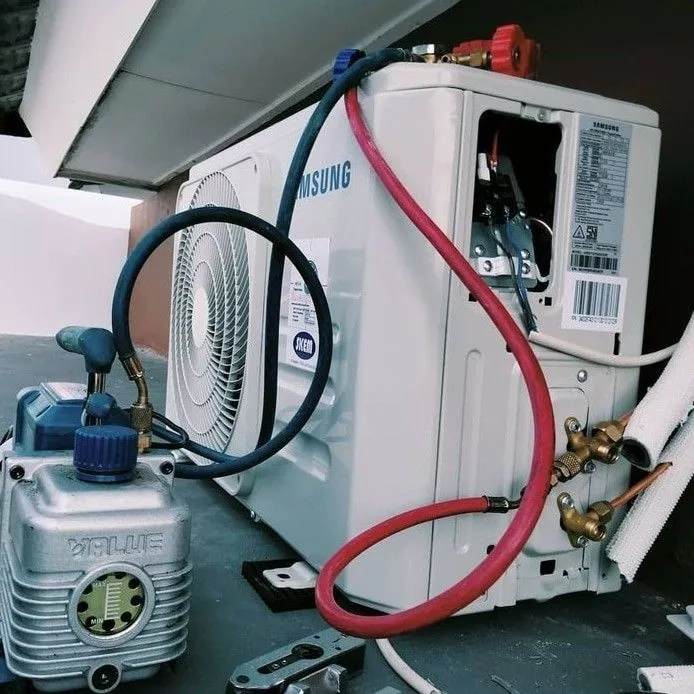
We investigate refrigerant leaks, repair faults in the cooling circuit and recharge systems with the appropriate refrigerant after testing. Get a lasting solution—not just another temporary top-up.
Tell us what needs attention. We’ll send your request to our service inbox and confirm it by email. For urgent assistance, call 070 332 5672.
Prefer to speak to us? Call 070 332 5672
We approach this service by understanding the equipment, its operating environment and the exact fault before recommending work. The following guidance explains the checks and decisions relevant to this specific service.
A healthy sealed refrigeration system should not consume refrigerant as a regular operating expense. If a unit has lost charge, we investigate whether a leak, previous improper service or another defect explains its symptoms. Adding refrigerant without understanding the cause may result in another failure and unnecessary cost.
When requesting assistance with regassing is not routine maintenance, describe what changed, when it started and which part of the equipment is affected. We can use those details to decide what information to review during diagnosis, without promising that a single symptom identifies the failed part.
A blocked condenser, faulty fan, poor seal, failed sensor or defrost problem can reduce cooling without refrigerant loss. Compressor problems and restrictions in the refrigeration circuit can also create similar customer complaints. We therefore combine operating observations with appropriate tests instead of quoting a gas quantity from a photograph of a warm fridge.
When requesting assistance with cooling problems that resemble low charge, describe what changed, when it started and which part of the equipment is affected. We can use those details to decide what information to review during diagnosis, without promising that a single symptom identifies the failed part.
Leak investigation can involve accessible joints, service fittings, vibration points and corrosion-prone sections. The applicable method depends on system design and approved equipment. We assess the fault before recommending any repair, recognising that some hidden leaks are not economically accessible.
When requesting assistance with finding leakage paths, describe what changed, when it started and which part of the equipment is affected. We can use those details to decide what information to review during diagnosis, without promising that a single symptom identifies the failed part.
Modern and older appliances may use very different refrigerants, pressures, lubricants and safety requirements. A service label and manufacturer specification are essential. Some refrigerants are flammable and require trained handling and suitable tools. We do not substitute one gas for another based on availability or price.
When requesting assistance with why refrigerant identity matters, describe what changed, when it started and which part of the equipment is affected. We can use those details to decide what information to review during diagnosis, without promising that a single symptom identifies the failed part.
Where a repairable leak is confirmed, the proper sequence includes safe recovery where applicable, fixing the defect, testing system integrity and carrying out the manufacturer-appropriate service process. Simply topping up a leaking unit does not correct the underlying problem. The exact steps depend on refrigerant and equipment type.
When requesting assistance with repairing before charging, describe what changed, when it started and which part of the equipment is affected. We can use those details to decide what information to review during diagnosis, without promising that a single symptom identifies the failed part.
Pricing depends on the source of the loss, the repairability of the leak, the refrigerant specified, accessibility and whether other components were damaged by prolonged running. We prefer to explain what testing and repair are required before quoting an all-inclusive gas recharge for an uninspected system.
When requesting assistance with what customers should know about costs, describe what changed, when it started and which part of the equipment is affected. We can use those details to decide what information to review during diagnosis, without promising that a single symptom identifies the failed part.
A fridge with an accessible connection leak differs significantly from one with a buried evaporator or deteriorated insulation. Appliance age and parts availability also affect the decision. We give attention to the condition of the entire cabinet and compressor rather than treating regassing as a guaranteed cure.
When requesting assistance with regassing versus replacing a cabinet, describe what changed, when it started and which part of the equipment is affected. We can use those details to decide what information to review during diagnosis, without promising that a single symptom identifies the failed part.
Please share whether the equipment is in an apartment, restaurant, office kitchen or retail store, and include safe access information. Photograph the appliance rating plate if accessible and describe previous repairs or repeated gas top-ups. This helps establish whether a leak investigation or broader refrigeration assessment should be arranged.
When requesting assistance with sandton appointment details, describe what changed, when it started and which part of the equipment is affected. We can use those details to decide what information to review during diagnosis, without promising that a single symptom identifies the failed part.
Pressure readings change with refrigerant type, operating temperature, heat load and system configuration. A reading viewed without those conditions cannot confirm the exact mass of refrigerant in a refrigerator. We consider equipment specification, temperatures and the relevant test method rather than using a universal pressure target. Incorrect charging can reduce performance and create further risk.
When requesting assistance with why pressures alone can mislead, describe what changed, when it started and which part of the equipment is affected. We can use those details to decide what information to review during diagnosis, without promising that a single symptom identifies the failed part.
Releasing refrigerant unnecessarily is harmful and, depending on the substance, may be subject to handling rules. We recommend leak correction and appropriate management rather than repeated topping up. Some older refrigerators contain substances that need particular care during recovery and disposal. A customer should know what refrigerant the equipment uses before authorising sealed-system work.
When requesting assistance with the environmental cost of repeated leakage, describe what changed, when it started and which part of the equipment is affected. We can use those details to decide what information to review during diagnosis, without promising that a single symptom identifies the failed part.
A fridge can have normal sealed-system operation but still fail to cool food because air is not circulating as designed. Fans, vents, defrost assemblies and door seals all influence observed temperatures. A technician should not skip those checks merely because a customer asks for regassing. We explain the likely diagnostic route and only discuss a charge correction after the refrigeration circuit has been evaluated.
When requesting assistance with separating an air problem from a gas problem, describe what changed, when it started and which part of the equipment is affected. We can use those details to decide what information to review during diagnosis, without promising that a single symptom identifies the failed part.
Ask what evidence indicates low refrigerant, whether a leak has been located, what repair is proposed and how correct operation will be verified. A transparent assessment should distinguish investigation costs from parts and specialist work. We welcome these questions because a durable repair matters more than a quick recharge that leaves the original defect unresolved.
When requesting assistance with questions before authorising work, describe what changed, when it started and which part of the equipment is affected. We can use those details to decide what information to review during diagnosis, without promising that a single symptom identifies the failed part.
When an appliance has already been regassed, tell us when it was done and whether a leak repair accompanied that visit. Short-term cooling after added refrigerant does not necessarily mean the original problem has been fixed. Correct refrigeration service depends on matching the fluid to the manufacturer specification, investigating the reason for loss and confirming appropriate operation. Some refrigerants introduce flammability precautions and demand specialised equipment; no customer should open a sealed system without suitable training. An integrated fridge may also suffer from poorly ventilated cabinetry, while a retail unit can experience heavy door traffic and blocked airflow. These operating details matter before interpreting pressure, frost or cabinet-temperature readings.
A clear quotation should distinguish investigation, leak repair, charging and validation instead of presenting them all as an unspecified gas refill. Customers can ask whether the identified problem explains their symptoms and what happens if a sealed component cannot be repaired economically. We explain the relevant options without implying that every refrigerator can be restored through the same process.
We handle refrigerant assessment enquiries in Sandton by starting with the equipment, its role and the reported symptom—not with a preselected replacement part. A complaint such as “not getting cold” can involve airflow, controls, heat rejection, power supply or refrigerant-circuit performance. We want to understand what changed, when it changed, and how the system behaved beforehand.
For restaurants in Sandton, the practical priority is often to understand whether temperature control has failed entirely or whether performance has declined under a particular operating load. We consider that distinction when discussing repair options. A technician may need to inspect the installation and measure relevant conditions before identifying the cause.
We recommend preparing the model number, any fault codes, operating temperature and a description of recent changes. This helps us plan the correct refrigerant assessment assessment and avoids promising a repair outcome before inspection.
When customers in Sandton report repeat refrigerant top-ups without confirmed repair, we do not assume a single cause. A warm fridge is not proof of low refrigerant. Door leaks, condenser fouling, evaporator icing, damaged controls and ventilation problems may produce a similar complaint. The interpretation depends on equipment design, usage and the information available at inspection.
Our assessment of confirming whether refrigerant is actually low also considers what happened immediately before the fault appeared. Changes in stock loading, cleaning routines, electrical supply or operating hours can help distinguish an intermittent fault from a persistent mechanical issue. We explain which observations are useful and which conclusions require measurement.
After corrective work, performance should be checked under relevant conditions. We explain what the customer can monitor afterward—for example, temperature trends, unusual noise, recurring alarms or door performance—so a continuing issue is identified promptly.
When customers in Sandton report oil residue or corrosion near refrigerant joints, we do not assume a single cause. A refrigeration circuit is designed to retain its specified charge. Where loss is confirmed, we investigate the likely leak source and assess whether it can be repaired and verified. The interpretation depends on equipment design, usage and the information available at inspection.
Our assessment of locating a leak before charging also considers what happened immediately before the fault appeared. Changes in stock loading, cleaning routines, electrical supply or operating hours can help distinguish an intermittent fault from a persistent mechanical issue. We explain which observations are useful and which conclusions require measurement.
When customers in Sandton report poor cooling blamed on gas without investigation, we do not assume a single cause. Different refrigerants are not interchangeable. Correct identification, equipment suitability and applicable handling requirements matter before recovering or charging a system. The interpretation depends on equipment design, usage and the information available at inspection.
Our assessment of refrigerant type and equipment label also considers what happened immediately before the fault appeared. Changes in stock loading, cleaning routines, electrical supply or operating hours can help distinguish an intermittent fault from a persistent mechanical issue. We explain which observations are useful and which conclusions require measurement.
When customers in Sandton report a fridge that cools briefly and then warms, we do not assume a single cause. A single gauge reading does not establish the correct charge. We interpret operating pressures alongside conditions, temperatures and manufacturer guidance. The interpretation depends on equipment design, usage and the information available at inspection.
Our assessment of pressure readings in context also considers what happened immediately before the fault appeared. Changes in stock loading, cleaning routines, electrical supply or operating hours can help distinguish an intermittent fault from a persistent mechanical issue. We explain which observations are useful and which conclusions require measurement.
When customers in Sandton report repeat refrigerant top-ups without confirmed repair, we do not assume a single cause. We assess cooling performance after relevant repairs and explain what temperature recovery the customer should monitor rather than treating a top-up as the whole job. The interpretation depends on equipment design, usage and the information available at inspection.
Our assessment of post-repair cooling verification also considers what happened immediately before the fault appeared. Changes in stock loading, cleaning routines, electrical supply or operating hours can help distinguish an intermittent fault from a persistent mechanical issue. We explain which observations are useful and which conclusions require measurement.
We ask customers to describe the equipment and its setting. A refrigerant assessment fault in a food retailers may have a different impact from a similar symptom in a commercial sites. Information about product type, equipment age, accessibility and whether the unit is completely out of service helps us understand the enquiry.
For installations or recurring breakdowns around Sandton, useful details include service access, ventilation around equipment, drainage, loading patterns and any recent modifications. Our goal is to investigate the operating conditions that influence long-term reliability, not simply treat one symptom in isolation.
Use the booking form above to outline your requirements. You can also call or send a WhatsApp message to 070 332 5672. A service request is an enquiry until it has been received and confirmed.
We recommend matching routine maintenance to the type of system, its usage and the manufacturer’s instructions. In homes, predictable cooling matters because even a short interruption may disrupt operations. The appropriate tasks and frequency depend on actual equipment rather than a blanket interval quoted for every installation.
Useful maintenance records include temperature trends, alarm history, abnormal noise, condenser cleaning, door condition, drainage and previous repairs. Those records help identify whether a repeated shutdown is an unresolved fault or a new issue.
DETAILED SERVICE GUIDANCE
Integrated refrigeration systems can have limited access to pipework and components. We evaluate service access and manufacturer guidance before committing to a repair approach. Decorative cabinetry may need careful protection and access planning; the visible symptom alone is not enough to quote a sealed-system repair.
Condensation on doors, blocked defrost drains and evaporator icing can create the impression that a fridge has lost refrigerant. We look for seal leakage, drainage and airflow issues first. A correctly charged unit can still perform poorly when the door does not close or air cannot circulate.
For fridge regassing for sandton properties, we start with the equipment model, fault history and what has changed in its operation. We then distinguish safe observations a customer can provide from checks that need a technician, and explain the likely repair scope only after the cause is established. If refrigeration performance threatens stored food or a production process, protect the stock and contact us on 070 332 5672. A clear account of the symptoms, location and equipment type helps us arrange the appropriate service discussion.
We work with refrigeration units requiring refrigerant-circuit diagnosis for domestic and commercial refrigeration owners. If you are dealing with loss of cooling, gradual temperature deterioration, frost patterns or suspected gas leaks, contact our team and explain what is happening. We'll discuss a practical way forward based on the equipment, the site and the fault.
We begin with what the equipment is doing now: temperature readings, start and stop behaviour, alarms, airflow and any recent changes. We examine the components linked to those symptoms so the proposed repair addresses the cause.
We discuss the findings and the work required, including whether servicing, part replacement or a wider repair is appropriate. When components need sourcing or the equipment needs further testing, we explain those steps before moving ahead.
Following agreed work, we check the relevant operation and controls. Cooling recovery can take time, particularly when stock, doors and room conditions affect the load, so we explain what to monitor after our visit.
No. Where low refrigerant is suspected, the cause must be investigated and any leaks addressed before a correct charge is considered.
Share the refrigerant type from the data plate, the unit model, previous repairs and when the cooling issue began.
Tell us your equipment, the problem and your location. We'll help you arrange the next step.
Tell us about your equipment and the problem you're experiencing.